The Greatest Strength of a CEO Isn't Expertise. It's Ownership.
When people think of a CEO, they often imagine someone who is brilliant, charismatic, and an expert in every aspect of business.
I don't think that's what makes a great CEO.
In my opinion, the greatest strength of a CEO is much simpler.
A CEO shows up every day and does whatever the business needs.
That's it.
Whether the task is glamorous or ordinary, strategic or operational, exciting or repetitive—a CEO is willing to step in wherever the organization needs them.
The Mindset Shift
Most professionals think like this:
"Is this my job?"
A CEO thinks differently:
"Does this need to be done?"
That one question changes everything.
The focus shifts from protecting a role to solving a problem.
The title becomes less important than the mission.
A CEO doesn't wake up thinking, "Today I will only do CEO work."
Instead, they ask:
- What is the biggest challenge facing the company today?
- What is blocking progress?
- Where can I create the most value?
- Who needs my help?
Then they get to work.
A CEO is a Generalist
One of the reasons great CEOs succeed is because they are generalists.
They may not be the world's best engineer.
They may not be the best salesperson.
They may not be the best marketer.
But they understand enough about every part of the business to make good decisions, ask the right questions, and bring the right people together.
They are constantly learning.
One day they are discussing product strategy.
The next day they are hiring people.
Later they are talking to customers.
Then they are reviewing financial statements.
In the evening they might be resolving an operational crisis.
The work changes every day.
The responsibility never changes.
Ownership Over Ego
A CEO understands something important:
No task is beneath them if it helps the organization succeed.
Titles don't solve problems.
Actions do.
The best leaders never say,
"That's not my responsibility."
Instead, they say,
"The company needs this. Let's make it happen."
That is ownership.
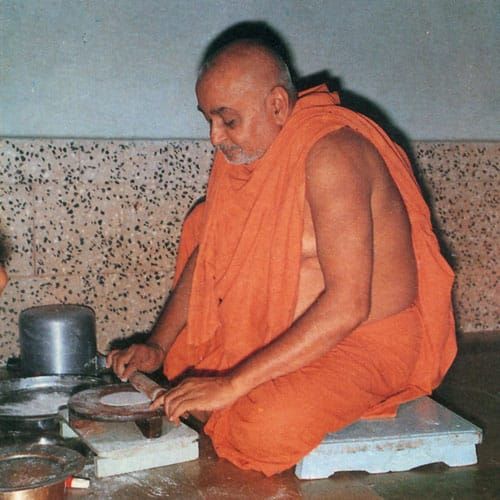
A Lesson from Pramukh Swami Maharaj
One incident from the life of Pramukh Swami Maharaj has always inspired me.
In 1950, at the age of just 28, he was appointed the President (Pramukh) of BAPS.
For most people, becoming the head of an organization is a moment to enjoy prestige and recognition.
But immediately after the appointment ceremony, when devotees had finished their meal, there was a large pile of dirty utensils waiting to be cleaned.
Without making any announcement...
Without asking anyone else...
Without thinking that the work was beneath his position...
Pramukh Swami Maharaj quietly picked up the utensils and began washing them himself.
Years later, someone asked why he did that instead of asking others.
His reply was simple:
"Just because we became Pramukh doesn't mean that we lost our duty to serve as a sevak."
That sentence carries one of the greatest leadership lessons I have ever heard.
Leadership is not about status.
Leadership is about service.
A title should never create distance between a leader and the work that needs to be done.
In fact, the higher the responsibility, the greater the willingness to serve.
Business and Spiritual Leadership
Although one is a spiritual organization and the other is a business, I believe the principle is exactly the same.
A CEO should never think,
"This work is below my level."
Instead, they should think,
"If this is what the organization needs right now, I will do it."
Sometimes that means negotiating with investors.
Sometimes it means interviewing candidates.
Sometimes it means talking to unhappy customers.
Sometimes it means staying late with the engineering team.
Sometimes it means arranging chairs before an event.
Sometimes it means cleaning up after everyone has left.
The task doesn't define the leader.
The willingness to do the task does.
Leadership is Service
Today, the phrase servant leadership is popular in management books.
But great leaders have practiced it long before the term became fashionable.
People don't follow leaders because of their designation.
They follow leaders because they trust them.
Trust grows when people see that their leader is willing to do the work alongside them.
A leader who serves earns respect.
A leader who only gives orders earns compliance.
There is a big difference.
The Real Job of a CEO
A CEO's job is not to know everything.
It is not to do everything.
It is not to have all the answers.
The real job of a CEO is to ensure that the most important problems get solved.
Sometimes they solve those problems personally.
Sometimes they empower someone else.
Sometimes they simply remove obstacles.
Whatever the approach, they take ownership.
Final Thoughts
The world often celebrates CEOs for their vision, intelligence, or communication skills.
Those qualities matter.
But I believe they all stand on one foundation:
Ownership.
Ownership means showing up every day.
Ownership means learning whatever is necessary.
Ownership means doing whatever the organization needs.
Ownership means putting the mission above the ego.
Pramukh Swami Maharaj demonstrated this through seva.
Great CEOs demonstrate it through leadership.
The context is different.
The principle is the same.
True leaders are never too big for small tasks because they understand that no task is small when it serves a greater purpose.
So the next time we face a challenge, perhaps the better question isn't:
"Is this my job?"
Instead, let us ask:
"Does this need to be done?"
That question is where ownership begins.
And ownership is where true leadership begins.

Comments ()